Air Elementals
Fire Elementals
Water Elementals
Earth Elementals
Showing posts with label lore. Show all posts
Showing posts with label lore. Show all posts
Friday, September 10, 2021

Saturday, February 13, 2021
New version of The Clear Recital available.
Dear Reader,
A new version of The Clear Recital is available. After spending the last half year working on updating and clarifying language, I can announce that The Clear Recital: Children of Déa Version is available for purchase. One may find there are some differences in the language here. It is more gender neutral to help the larger community of Independent Filianists to find comfort in the texts. I have also incorporated into the holy narrative of the Creation and the mythos of the Daughter elements that have been revealed to myself and others in the past few years through personal mystic experiences.
Some in the Orthodox Filianic community may have objection to the adjustments made to the holy texts. I would contend that these adjustments are proper and necessary to modernize the language for today's people. There are few major changes in the wisdom texts but those changes reflect that the modern household is not structured as the traditional Madrian household, which was the focus of those sections. I post at the final page the documents I consulted while working on this project. I was not able to include everything but the documents that can be purchased or accessed easily are listed.
Tuesday, January 26, 2021
Practical Witchery: Elementals
Dear Reader,
The system of correspondences that includes the classical elements has been around for so long and in so many variations that its origin is lost to the mists of time. I am going to introduce you to the system of working with the classical elements of existence that I have been using for over two decades now. Unlike what some of the newer authors in the Wiccan community have claimed, this system has been around for millennia. Wicca did not invent the elemental classification system. If this claim is put forth, consider the entire work with a grain of salt because the author didn't do their homework and is ignorant about the history of Wicca.
In the European historical context, the classical elements are: Air, Fire, Water, Earth, and Spirit. In the Asiatic historical context it is a bit muddied because of the influence of European invaders destroying documents with their efforts to force the conversion of the native peoples to some variant of Christianity. The clearest evidence of the classical elements in that part of the world comes from China (which has a very, very long history as a nation and an astounding historical record). In traditional Chinese thought, the classical elements are wood, fire, metal, earth, and water.
Wikipedia has an interesting article on classical elements with relatively reliable sources. I am not going to go over the different cultures that have used different classification systems. That is beyond the scope of this post and I am not well versed enough in pan-cultural elemental classification systems from the pre-Christian era of history to do the topic justice. (This is something that would be worthy of a doctorate level paper. I'm simply not able to accomplish that, yet.)
Wicca comes from the European line of historical metaphysics. There is some disagreement within the Wiccan community as to what the correct order and classifications are for the classical elements. This lack of singularly codified system of classification is not an indication of disorganization as much as a signifier of the diversity of the Wiccan community. If we look back at the work of Gerald Gardner, considered the father of Wicca and modern witchcraft, we find that he organizes them thusly:
- Element of Air; Direction is East; Magical Weapon is the Sword/Athame*
- Element of Fire; Direction is South; Magical Weapon is the Wand
- Element of Water; Direction is West; Magical Weapon is the Chalice
- Element of Earth; Direction is North; Magical Weapon is the Paten/Pentacle
In my personal magical workings, the directional orientations remain the same. The magical weapons for Air and Fire are reversed. My logic for this is blades are fashioned in fire and wands are the branches of trees, which are high in the air. Now, each element has an Intelligence associated with it. They can be described variously as Angels, Janyati, or other spiritual beings. In traditional Wicca, these Intelligences are the Guardians of the Elements and known as Elementals. They can be worked with to grow in one's studies of the occult, to develop greater spiritual balance in one's life, or to manifest that which one desires. Elementals are generally kindly inclined towards humanity. They are a manifestation of the Divine within the realm of the world we live.
While the elemental classification system helps to organize the world we live in, the Elemental beings can influence the world through the things we recognize as under their purview. Next week, I will be introducing you to the Element of Air.
*Note*
The term athame here is not to be confused with the Filianic term athame. The athame of Wicca (and other witchcraft traditions that use the term) refers to a ritual knife or dagger that is used for magical practices.
Friday, January 22, 2021
Recommendation: The Eastminster Critical Edition of the Clear Recital & Oxonian Rite
Dear Reader,
This week's recommendation is for the Orthodox Filianic community and those who have Madrian leanings in their practice of their faith. The Eastminster Critical Edition of the Clear Recital and of the Oxonian Rite is a treasure trove that is full of wonderful information and beautifully assembled. It has the most complete collection of the Teachings of the Daughter that I have encountered. It clearly outlines the history of the Filianic religion as well as distinguishes the differences between Filianism and Déanism.
Unlike other texts, the ECE has excerpts from the writings of Madria Olga, a charismatically ordained priestess of Déa who lead the Rosa Madriana community up until her death from cancer in 2008. Madria Olga's writings heavily informed the modern Filianic community's faith practices and continue to act as a guide for believers. The works of other priestesses and thinkers from earlier Filianic communities are referenced as well.
A very through history of Filianism is presented, detailing in chronological order the unfurling of this faith through time. There is a discussion of modern Filianism (as of the time of this edition's printing) and the rise of Independent Filianists. This discussion is handled with great care and attention to detail, which is impressive considering the wide variety of Independent Filianists.
Additionally, the ECE includes a breviary and hymnal that have been used historically by the Orthodox Filianic community. It also gives detailed accounting of the Rosary and the different contemplative paths. Along side these two important sections, there is a calendar of sorts listing the dates of holy days and something about their historical observances.
Tuesday, September 22, 2020
Baby Steps: Reinterpreting the Sacred Texts
Dear Reader,
Because the Clear Recital is a living document, there are different versions available for different sects of Filianism and Déanism. As I have been spending the last several months studying the available texts, I came to the realization that it was acceptable to develop another version of the Clear Recitial that illuminates the roles of spirits and other higher beings in service (and relationship) to Déa. It was a nerve wracking thought to reinterpret the holy scriptures. But then I realized that I would be doing a disservice if I did not contribute to the body of literature that is the Clear Recital with the knowledge that Déa has revealed to me directly and through others.
I'm currently working on the sacred mythos. It is my humble attempt to make the narrative easier to follow and illuminate the darkness that Our Lady passed through to reach her goal. The most upsetting part was writing the confrontation between Our Lady and the Dark Queen's daughters. I'm tempted to just give up working on this for the day because of how saddening it was. I know that the coming chapter of the mythos is a light of hope. So, I will continue my efforts.
I anticipate minor changes to the wisdom texts. This is because in my readings, it seems that the Lux Madrian community was moving towards an all inclusive gender reading of these texts. I will still use the term 'maid' as they did, a subsitute for all of humankind. But I will be noting this at the forward of that section rather than at the conclusion as others have in their interpretations of the texts.
It is not my intent to take away from the Clear Recital. It is my intent to help polish the mirror we have been given by Déa in this text so that it may more fully reflect her light. My research in earnest over the last month has sown in my heart a deep affection Madrian community. As I compare the ECE and the NCUV, I find gems in them that go back to that community which lifts my heart and tells me that I am on the correct path.
The version of the Clear Recital that I am working on is but a wave that reflects and is filled with the light of Déa. All the works of wisdom of all the religions are like yet more waves that do the same, some with greater success than others. It is my hope that the Truth that is the ocean these waves populate will shine through in my writing.
Friday, November 9, 2018
Recommendation: Internet edition.
Dear Reader,
If you haven't checked out the Internet Sacred Texts archive, you really should. There's tons of great information on pretty much every topic you can think of. Their digital occult library is fantastic. This is a site where you can do deep research on obscure things. Their digital reproduction of J.G. Frazer's The Golden Bough is excellent, for example. If you can't find what you're looking for elsewhere, check this site out. They've been around since the 90s and are 100% supported by donations. If you were looking for a good place to donate money to help preserve our cultural heritage, this is one of the ones I would recommend as well.
If you haven't checked out the Internet Sacred Texts archive, you really should. There's tons of great information on pretty much every topic you can think of. Their digital occult library is fantastic. This is a site where you can do deep research on obscure things. Their digital reproduction of J.G. Frazer's The Golden Bough is excellent, for example. If you can't find what you're looking for elsewhere, check this site out. They've been around since the 90s and are 100% supported by donations. If you were looking for a good place to donate money to help preserve our cultural heritage, this is one of the ones I would recommend as well.
Monday, February 26, 2018
Pagan Parenting: Passing down Lore.
 |
| Me with my eldest as an infant. |
Equally important is the stories that go with the family's religious inclinations. They help foster a sense of ethics in children and give them tools to better understand how the world works. In some families, this comes from the family bible and the church they are a part of. In other families, this comes from the tales of the gods and the temple they attend. All of this is informed by the faith community they are a part of. This can be a profoundly educational and enlightening experience.
It gets harder when you move into smaller religious practices. Suddenly, the population of people who are going to help you explain how the world works gets markedly smaller. What is a pagan parent to do when their six year old is asking them "Who takes care of the Sun at night?" as you are putting them to bed? You have a few different options. One is to fob the conversation off to another time (which is usually the best option when it is time for the wee one to be going to bed). A second is to give a "You don't worry about that, the Sun is just fine on the other side of the Earth." or something similar. An answer that is a non-answer. A third answer is to introduce them to the old tales of the gods or modern ones that speak of how they attend to the world.
[As an aside, when my boys became afraid of the solar eclipse, I told them that Sunna was letting Mani visit her. Something a lot more reassuring than the Sun being eaten by a wolf or a dragon. Also much closer to what their science teachers are going to be telling them. Makes for less arguments about what is true, because my eldest has hit that age of questioning.]
The biggest thing in answering such questions and sharing the wisdom of our ancestors with the younger generations is to remain consistent and clear. Equally important is to keep in mind what your children can understand. A six year old will have an easier time handling the idea that Sunna minds the Sun than the complicated matter of astrophysics and stellar dynamics. As children get older, the questions get more complicated. Somewhere, you're going to hit a wall. You're going to reach the question that you can't answer.
That's ok. This is where you encourage them to think about and explore the world. If they are asking questions about morality and you're not sure how to explain something, explore the topic together and work together to find the answers you need. The internet is a glorious tool for research and education. It is just as helpful and educational to go to the local library and seek out the aid of a librarian to find books on the topic in question. There are many holes in the knowledge we inherited. It is our job to fill them as best we can. In some cases, this may mean building new stories (Mani visiting Sunna for the eclipse) and in some cases, it may mean learning about difficult topics and working to find your own conclusions. And that's just fine because it is a living faith tradition that adapts and changes to the needs of the practitioners.
Monday, March 27, 2017
Divination: Runes - Lesson 1 : Intro
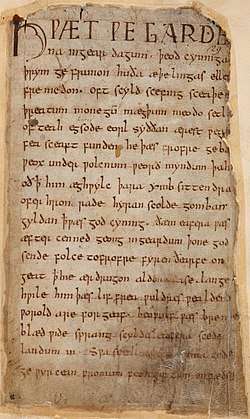 |
| Image from Wikipedia |
The runes are more than just a system of letters. Or should I say, they are a system of letters that harkens back to the eras before literacy was common and letters carried a sense of magical weight behind them in addition to the common understandings. Some of this is remembered in things like individual runes being associated with specific deities (such as Kenaz/Cen being associated with Loki and Ing being associated with Freyr). The runes have a stronger attachment to magic than their descendant alphabets. Some would say that it is because they are 'pure' iconography from the ancient era. Others would argue that it is because they don't have the modern indifference attached to them as is with the letters of the English alphabet, for example.
It is my opinion that these arguments are helpful but they do not fully encompass the depth of the strength of runes as a magical system. In the next few divination articles, I am going to do my best to detail the history of runes as a magical system and a method of divination. I am also going to give a simple guide to how to use them. I will not discuss bind runes in great detail here, because this is a very specialized form of rune magic that really should be covered on its own. I will also try to present some information on how different regions used runes historically and the influence they had on modern language. This is a very big topic, so please forgive me if I gloss over some details, but my focus is going to show how runes are still very present in modern day languages even though their appearance has changed.
It is my hope that this series of nine posts help make runes a little less intimidating and provide a good starting point to grow as a person who performs divination. It may happen that the techniques of divination that I present are different from how others do this. There is a very good reason for this. My approach to reading the runes is intuitive and based in what I have learned over the years in rather undirected study. I will do my best to present information on how others perform divination using runes, but I apologize in advance for any errors that are in my work. I invite any who are experienced in this specialized system of divination to please contact me when you see any errors in my posts so that I can correct the material accordingly.
Saturday, October 8, 2016
The Role of Myth and What It Does for Us.
Myth is a commonly misunderstood term. Just like the term 'fable,'
the term myth has become associated with the concept of untruth and
lies. This colloquial understanding fails to consider the role that
myths serve in the continuation of cultural context elements, the
instruction in social roles, and developing the personal concept of
how one's life is supposed to unfurl. Just as culture is fluid and
will change as time progresses, so too have myths. Their method of
transmission has altered considerably. Also, the context where these
stories are drawn from have shifted with the way the culture of the
United States has developed over time.
The Merriam-Webster dictionary defines myth as a usually traditional story of ostensibly historical events that serves to unfold part of the world view of a people or explain a practice, belief, or natural phenomenon. Renowned mythologist, Joseph Campbell, explained that myths served to help people in the past to understand the major questions about life and existence. Many people who study myths consider them to serve, in some part, as a route by which the recipient can build their comprehension of how the fundamentals of life unfolds. Campbell referred to this as the Hero's Journey.
This journey has many different manifestations depending upon the cultural context the myth is from. Within the American context, the hero's journey consists of a disturbance of the known and familiar environs, movement into unknown territory, confrontation with oppositional forces, triumph over the opposition, return to the place of origin and celebration of victory. This mythic architecture is difficult to identify in things such as the folktales that are found in the different regions of the United States due to the very diverse subcultures within the country. However, when you consider the larger, national scope body of myths, we find this pattern emerges.
Consider for a moment the mythos surrounding World War II. The commonly assumed mythic elements about this most egregious period of world history is that the United States was most undoubtedly all 'good' in their conduct. The movies and propaganda from the era perpetuate the image that the hero of this period was a white male between the ages of 20 and 25 in excellent physical health of a heterosexual orientation. Additionally, the hero is understood to have come from a close knit community, where he is of a protestant Christian background and possessed of a middle class upbringing.
The initiation of the war serves as the event that disturbs the hero and prompts him to action. The hero then moves into the theater of war. There he engages in dramatic combat with the enemy. The hero then defeats the enemy and both enacts vengeance for the event that sparked the war (the Pearl Harbor bombing) and rescues the oppressed. The hero then returns home to life a life of domestic bliss as defined as the American dream. Part of the success of this myth is that a significant amount of the myth's materials are drawn from actual events. Another part of the success of this myth is the way that it encourages the American listener to think positively about themselves, easily envisioning themselves as the hero of the myth.
When compared to the grisly and complicated facts of the war and life after World War II, the myth is clearly found to be overly simplistic. This myth, however, serves several very important functions. The myth arose during a time of crisis and there was a necessity for unity within the culture. Myths act to transmit important information about cultural identity and taboos through a society. The myth in this example, tells the listener that Americans are 'good' people who take up arms in defense of themselves and to right the wrongs of the world. It also tells them that people who engage in such action will be rewarded for it. Thirdly, the myth reinforces that the cultural norms of the era are upheld, including the biases against people of non-Caucasian descent.
Historical myths served a similar function. When considering the myth of Odysseus, we find that similar information can be conveyed with respect to what ancient Grecian heros (and thereby men) were expected to be like. The first thing apparent is that the hero of this myth is of an upper class background. This tells the listener that Greek men of importance must be born into the high social strata. It leads one to think that the higher their social standing, the greater their importance. Odysseus is clever and clearly educated, which transmits that high status is placed on intelligence. His continual effort to return to his wife and son tells the listener that a Greek man is expected to honor their familial and social obligations. Many other messages, some far more subtle like the abuse of Odysseus when he is disguised as a beggar, come together to present a complex picture of what the social landscape of ancient Greece was at the time that this myth was produced.
With the advent of more complex communication methods, the adaptation of myths is much faster. Traditionally, a myth would develop different nuances over the course of generations as it was passed down orally. With the development of writing, myth became less fluid and themes persisted longer. It is from this that many elements such as religious dogma developed. At the beginning of the 21st century, we see a return of the more fluid mythic structures. Memes are transmitted faster and myth cycles move through more rapid fluctuations because of this.
Unique to modern mythology is the 'urban legend.' Urban legends are the immediate forerunner of internet memes. With the rise of the internet, urban legends propagate faster then ever. They serve both the role of a fable and a myth. Like fables, most urban legends serve as cautionary tales. Some of the most virulent urban legends and the most persistent urban legends share a common theme with the larger body of mythos that they exist in. The popular anti-vaccination urban legend takes the cautionary warning that one should not vaccinate their children because it is comprised of dangerous components.
When we consider this 'mini-myth', we find that several things are being transmitted to the recipient. First, the listener is told that vaccination is dangerous. This is then followed by the message that past knowledge is insufficient. Additionally, the subtle message is given that the government, in most manifestations of this urban legend, is seeking to harm the populace. This urban legend fits into a larger mythic scheme that exists within the United States at the moment. The larger mythic scheme tells the audience that the government exists to oppress the citizenry. It exhorts the listeners to rely on smaller social entities and take a more isolationist, independent world view.
Urban legends, when considered within the mythic structure they contribute to, suddenly become parts of a more complex picture. They are no longer laughable random nonsense that are to be mocked as the words of the ignorant (which is another mythic structure that subtly influences social interactions). Instead, urban legends are revealed to be the working components of the linguistic machinery that shapes how culture develops. Through careful study of the prevalent urban legends and mythic structures in play, one can build an accurate anthropological portrait of the era that is being examined and project how the next era will unfold.
The Merriam-Webster dictionary defines myth as a usually traditional story of ostensibly historical events that serves to unfold part of the world view of a people or explain a practice, belief, or natural phenomenon. Renowned mythologist, Joseph Campbell, explained that myths served to help people in the past to understand the major questions about life and existence. Many people who study myths consider them to serve, in some part, as a route by which the recipient can build their comprehension of how the fundamentals of life unfolds. Campbell referred to this as the Hero's Journey.
This journey has many different manifestations depending upon the cultural context the myth is from. Within the American context, the hero's journey consists of a disturbance of the known and familiar environs, movement into unknown territory, confrontation with oppositional forces, triumph over the opposition, return to the place of origin and celebration of victory. This mythic architecture is difficult to identify in things such as the folktales that are found in the different regions of the United States due to the very diverse subcultures within the country. However, when you consider the larger, national scope body of myths, we find this pattern emerges.
Consider for a moment the mythos surrounding World War II. The commonly assumed mythic elements about this most egregious period of world history is that the United States was most undoubtedly all 'good' in their conduct. The movies and propaganda from the era perpetuate the image that the hero of this period was a white male between the ages of 20 and 25 in excellent physical health of a heterosexual orientation. Additionally, the hero is understood to have come from a close knit community, where he is of a protestant Christian background and possessed of a middle class upbringing.
The initiation of the war serves as the event that disturbs the hero and prompts him to action. The hero then moves into the theater of war. There he engages in dramatic combat with the enemy. The hero then defeats the enemy and both enacts vengeance for the event that sparked the war (the Pearl Harbor bombing) and rescues the oppressed. The hero then returns home to life a life of domestic bliss as defined as the American dream. Part of the success of this myth is that a significant amount of the myth's materials are drawn from actual events. Another part of the success of this myth is the way that it encourages the American listener to think positively about themselves, easily envisioning themselves as the hero of the myth.
When compared to the grisly and complicated facts of the war and life after World War II, the myth is clearly found to be overly simplistic. This myth, however, serves several very important functions. The myth arose during a time of crisis and there was a necessity for unity within the culture. Myths act to transmit important information about cultural identity and taboos through a society. The myth in this example, tells the listener that Americans are 'good' people who take up arms in defense of themselves and to right the wrongs of the world. It also tells them that people who engage in such action will be rewarded for it. Thirdly, the myth reinforces that the cultural norms of the era are upheld, including the biases against people of non-Caucasian descent.
Historical myths served a similar function. When considering the myth of Odysseus, we find that similar information can be conveyed with respect to what ancient Grecian heros (and thereby men) were expected to be like. The first thing apparent is that the hero of this myth is of an upper class background. This tells the listener that Greek men of importance must be born into the high social strata. It leads one to think that the higher their social standing, the greater their importance. Odysseus is clever and clearly educated, which transmits that high status is placed on intelligence. His continual effort to return to his wife and son tells the listener that a Greek man is expected to honor their familial and social obligations. Many other messages, some far more subtle like the abuse of Odysseus when he is disguised as a beggar, come together to present a complex picture of what the social landscape of ancient Greece was at the time that this myth was produced.
With the advent of more complex communication methods, the adaptation of myths is much faster. Traditionally, a myth would develop different nuances over the course of generations as it was passed down orally. With the development of writing, myth became less fluid and themes persisted longer. It is from this that many elements such as religious dogma developed. At the beginning of the 21st century, we see a return of the more fluid mythic structures. Memes are transmitted faster and myth cycles move through more rapid fluctuations because of this.
Unique to modern mythology is the 'urban legend.' Urban legends are the immediate forerunner of internet memes. With the rise of the internet, urban legends propagate faster then ever. They serve both the role of a fable and a myth. Like fables, most urban legends serve as cautionary tales. Some of the most virulent urban legends and the most persistent urban legends share a common theme with the larger body of mythos that they exist in. The popular anti-vaccination urban legend takes the cautionary warning that one should not vaccinate their children because it is comprised of dangerous components.
When we consider this 'mini-myth', we find that several things are being transmitted to the recipient. First, the listener is told that vaccination is dangerous. This is then followed by the message that past knowledge is insufficient. Additionally, the subtle message is given that the government, in most manifestations of this urban legend, is seeking to harm the populace. This urban legend fits into a larger mythic scheme that exists within the United States at the moment. The larger mythic scheme tells the audience that the government exists to oppress the citizenry. It exhorts the listeners to rely on smaller social entities and take a more isolationist, independent world view.
Urban legends, when considered within the mythic structure they contribute to, suddenly become parts of a more complex picture. They are no longer laughable random nonsense that are to be mocked as the words of the ignorant (which is another mythic structure that subtly influences social interactions). Instead, urban legends are revealed to be the working components of the linguistic machinery that shapes how culture develops. Through careful study of the prevalent urban legends and mythic structures in play, one can build an accurate anthropological portrait of the era that is being examined and project how the next era will unfold.
This is where the real value of myth
shines through. Myth is more then the lens by which one might examine
a culture. Studying myth and the ways that it unfolds allows for one
to develop a predictive model for future social developments. Myth
tells the people of a given culture what social norms they are
expected to conform to. It also reinforces existing cultural
structures by providing an ideological basis that is connected to
past events.
~*~*~*~*~*~*~*~*~*~
This was originally published 2007 on Helium, under the pen name Deb M.
Subscribe to:
Posts (Atom)