Blurb

Thoughts, lessons, and theology from an eclectic witch from a varied background.
Showing posts with label interfaith. Show all posts

Tuesday, November 14, 2023

Practical Witchcraft: Dirt Poor Witchcraft - Stealth Altars and Shrines.

 Dear Reader,

Sometimes we find ourselves in places hostile to our religion. And yet we wish to have an icon and a small place set aside for worship. Being a bit crafty you can create everything from a portable altar to a portable shrine (as I have pictured here devoted to Freyr-Ingvi).

I'm not a big fan of stealth altars and shrines but I recognize the necessity of them and I have used them in the past when it was necessary. Candy tins and diminutive boxes are excellent tools for this sort of project. With a little craft paper, you can line the inside of the box with designs you associate with the deity or spirit in question. ModPodge is a popular adhesive used for these projects but I find it dries to fast for me to position things just right. Arleen's Craft Glue is less expensive and has just about the same versatility as ModPodge. If you're looking for a serious business method of securing things in the box, don't go with super glue because it may destroy your project. Use judicious amounts of hot glue.

Some people want to have an icon in their shrine/altar box. String dolls are an excellent way and sometimes you accidentally capture the essence of traditional figures of the deity or spirit in question. That penis shaped portion of the string doll of Freyr was entirely unintentional. I still don't know how it appeared. The choice of yarn color for the string doll was based on what I had at hand. You can be guided by traditional correspondences or your personal associations for color if you have the luxury of a range of colors available.

The most important part of a stealth shrine or altar is making sure that it can close discreetly, fit where ever you need it, and that you have all your supplies for it inside, neatly tucked away so it will close.

Thursday, November 9, 2023

Working Magic In Stitches

 Dear Reader,

As any crafter can tell you, what they do is a labor of love and a work of art. Even the kiddie artwork with the googly eyes counts because they put their heart into it and worked hard. When you start looking at old fashioned crafts (i.e. knitting, crochet, needlework, weaving, etc.), you can discover a world of folklore surrounding these crafts and myths featuring them. Careful examination of the folklore and mythos behind these crafts reveals that they are not mere past times to wittle away idle time. You will discover there is true magic hidden there.

Some of the modern folklore seems odd but unerringly true. Consider the tale of the 'Boyfriend Sweater'. A young knitter is utterly smitten with their boyfriend and decides to make them a love gift of a sweater. After many hours of tiresome and at time tedious work, the sweater is done. The knitter presents their gift to their beloved only to discover that their boyfriend's response is tepid and they never wear the sweater. Eventually, the couple parts, for our young knitter realizes that the boyfriend didn't truly appreciate them or their effort. Many knitters can tell a story like this of people disregarding their handwork in favor of mass produced goods.

There is the folk-wisdom of weaving a strand of your hair into a garment for a person will bind them to you as long as they own the garment. I've yet to hear of this little gem failing.

In ancient times, weavers were considered to have magic powers. Their ability to weave, to tangle, and untangle their work sympathetically effected their people's success on the battlefield and abroad. Spinners were also viewed in this fashion. Indeed, some cultures regarded spinners highly and with great caution because through their work they could influence one's fate.

Those who could sew (and by extension do embroidery and other forms of needlework) could bind or unbind people. They could fashion intricate sigils and spells of protection with the designs they produced. The core element in all of these crafts is not merely the fact that they are fiber arts, but they are highly effective means of casting intention into action. And such deeds could be done openly when more overt ritual practices are opposed by the overculture.

Wednesday, August 23, 2023

Practical Witchcraft: Dirt Poor Witchcraft - Offerings

 Dear Reader,

Offerings are a big deal. They are part of the glue that keeps the relationship between you and the spiritual beings in your life chugging along. There's a lot of competition between folks who post pics of their altars as to who is giving the best offerings and such. There is also a great deal of unverified personal gnosis that is flying around the community as to who likes what offerings and dislikes what other offerings. Don't let all of this talk discourage you.

While offerings are a big deal, they don't have to be expensive, brand name, or luxurious. They can be simple, humble, and as mundane as a shiny stone you saw that reminded you of Them. One of the most common offerings when one is on a tight budget is water. Some may scoff at water being an appropriate offering. For millennia, potable water just couldn't be had. This is why so many ancient cultures brewed up things like beer, mead, and wine. Yes, there was alcohol but the alcohol in it was what made the water safe to drink.

Your Mesopotamian spirit friend may be quite bored with beer, as it was their everyday beverage. Giving a glass of clean water would be a delightful change of pace for them. Offering common modern beverages is also an option. Popular rumor has it that Loki enjoys an occasional bit of Mountain Dew. It doesn't have to be a special wine glass or something you inherited from your great grandmother's china to serve it in. It can be in a mini-plastic cup (they're basically shot glasses but don't call 'em that).

Breads of many forms are staples of offerings. This doesn't have to be the case. You can put out some cookies, bake some biscuits, or make an extra serving of oatmeal in the morning. Indeed, you can put a small portion of your meal aside for Them. Don't go too far and sacrifice your health in order to express you affection and devotion. Your spiritual companions want to see you doing well and as healthy as you can be. This leads to a third option in giving food or drink. Dedicate your first bite/sip to your spiritual companions. For people who come from a Christian background, this may be a bit awkward at first. 

If you have been raised in a custom where you ask the Divine to bless your meal, you can compose a blessing dedicating the meal to your spiritual companions to be said (whispered or thought) over the meal before you eat.

Monday, April 18, 2022

Practical Witchery: Depression Witchcraft (pt. 3)

 Dear Reader,

It's been rough for a while now over in my neck of the woods. I'm starting to come out of that depressive episode and, boy, is there a mess around here to clean up. Depression can make you neglect things that are important, like self-care. For witches, self-care looks a little different for every witch you meet. One thing that they'll agree on is that regular practice of grounding and centering yourself is important to be on the path to recovery from depression. Now, if you ask 13 witches how to do this, you're going to get 463 answers.

Here's my contribution to that 463 answers.

  • Eat or drink something - the act of consuming food and beverages forces one to focus on their body.*
  • Sit on the floor or the ground. Then project your energy down through your spine and pelvis into the surface you are sitting on. Allow it to be absorbed and dissipate.
  • Take a shower or a bath - this is like the first suggestion and works to get you back to a 'mundane' headspace.*
  • Hold a rock or put your hands into dirt. Then project your energy through your arms, out your hands and into the stone or dirt. If you're using a stone, after projecting your energy into the stone, set it on the ground and wait for the energy to dissipate.
  • Wash your hands or place your hands in running water
  • Hold an ice-cube, for a more intense sensation to focus on place the ice cube in your mouth
  • Note five elements of your environment that you see. Repeat the process with your other senses
  • Practice the Square Breathing technique: Inhale to a slow count of four, hold your breath to a slow count of four, exhale to a slow count of four. Repeat as necessary.
You may notice that some of my suggestions are classic techniques used to help people with PTSD and other dissociative disorders to refocus on their present situation. These techniques work for people with depression and are struggling to focus. They are also highly effective for helping you let go unwanted energy.

*For people who are bodily dysphoric, these exercises are difficult and I recommend choosing one of the other exercises. Remember, this is supposed to be a gentle exercise to ground unwanted energy and focus you on the present moment.

Addendum: Bodily dysphoria happens for many reasons and to many people. If you are struggling with it, you are not alone. Be gentle with yourself and your body, it is your home on this plane and as special as you are. (And yes you are special and deserve to be happy, healthy, and well.)

Thursday, September 10, 2020

From Consideration to Contemplation: A Process.

 Dear Reader,

When one is confronted with holy mysteries, it is easy to gloss over them when you cannot see their connection to daily life. Sometimes, we just shrug and say "It's a mystery and beyond our ability to comprehend." Other times, we proverbially cover our eyes and whistle past them, trying not to be unsettled by what they might mean if we looked directly at them. It is an easy path to acknowledge holy mysteries but not reflect upon their role within our faith, whatever that faith might be.

It is when we move from considering them on the holy days to contemplating them through out our days that we move deeper into faith. We begin by considering their meaning at the times that are fitting. For a Wiccan, the holy mystery of the Great Rite may become a topic of thought around the time of the Full Moon, when that faith typically celebrates it. For a Filianic or Déanic believer, the holy mystery of the Daughter's death and resurrection may become a topic of thought around the time of high holy day of Eastre. For a Christian, the holy mystery of the birth of Jesus of Nazereth may become a topic of thought around the time of their high holy day of Christmas. Regardless of your faith, there are mysteries associated with days and seasons. It is easier to consider them during those days and seasons because there are reminders about us.

More challenging is to consider the holy mysteries when there are fewer reminders immediately present. Still, with discipline and practice, one can build up a habit of thinking about the holy mysteries in relationship to their own life. One can recognize the cycles of the holy mysteries reflected in their lives and become a participant in those mysteries. For some, this is done by way of ritual prayer such as the rosary. For others, this is done by way of devotional reading and journalwork. Yet still others move along a path that blends both together.

Consideration is the act of observing the mystery and how it moves in your world. Contemplation is built upon a foundation of consideration. Contemplation is the act of engaging the mystery and how you move within it. It is changing the frame of reference from external to internal, from an event to a personal experience. As life is ever changing, the process of contemplation of the same mystery at different times evokes different experiences. Most people are comfortable with consideration. It is a depth of relationship with the Divine that allows them to percieve greater independence from the Divine. This is a socially encouraged attitude within the U.S. because our overculture places great emphasis upon "rugged individuality". Contemplation, however, opens one up to see that they are connected with the Divine through the holy mysteries and connected with the world through the same mysteries. This can be uncomfortable and it can make life complicated.

There is, however, a unique reward to engaging in contemplation. The deeper relationship that one has with the Divine, the more that relationship becomes a two-way relationship. The contemplative relationship enables one to see where the Divine is manifest in the world and the gifts offered by the Divine to the devotee. This is the first step upon the path of the mystic. A mystic is not some elevated being wrapped in human flesh. They are but a person engaged in a deeply personal and powerful relationship with the Divine. While not everyone can have the relationship that a mystic does because it runs counter to their temperment, they can still build a personal relationship with the Divine that brings them comfort and strength during times of difficulty. All it takes is contemplation.

Tuesday, March 24, 2020

Where are the gods? They're here with us.

Dear Reader,

Some of you may know that I have struggled with the question of divine mercy in the face of tragedy. It is hard to keep faith in it when you watch loved ones die. It is hard to keep faith in it when you thole your own sufferings. It is especially hard to keep faith in divine mercy when a tragedy as large as a pandemic is happening and the uncertainty as to if it will rob you or your loved ones of their lives.

We cry out to the gods "Why have you let this happen?" For too long have we been taught that the gods are not subject to wyrd. For too long have we been taught that they are all powerful. There is a reason why there are many gods of many different things. There is a reason why the gods can not escape their own fated interactions with other beings. (My friends in the Filianic and Déanic community, give me but a moment of your patience and I will explain what I am trying to express.)

Life flourishes when given the opportunity. Life on any scale will do so with the distinct lack of predators or natural checks to the point that it threatens the very environment in which it lives. The COVID-19 situation is the same as an invasive species destroying a waterway. It just happens that the destruction is to humans. We are desperately searching for a way to check COVID-19, just as the local community where I live is searching for a way to prevent the algae blooms on the lake, and restore parity to the system that is being decimated by the invasive species.

The gods have not abandoned us. They are here with us. They are at our bed sides as we fight with COVID-19 and its attendant complications. They are with the medical and safety professionals who risk their lives to help our communities. They are with the grocery store workers and countless other vital professionals who keep our communities alive while we are practicing social distancing.

The gods did not have a choice in which life flourishes and which life withers. That is wyrd. We may appeal to them to intervene somehow and put off when death comes for us. But they are as helpless to wyrd as we are. Even Déa, for the Daughter descended into the world and became subject to wyrd perpetually as part of Her sacrifice.

Do not despair. The gods are with you. Turn to them and unburden your heart to them. Seek out their good will. Pour out offerings unto them if you are able, even if it is but a few drops of water. They will hear your cries. They will comfort you.

Wednesday, May 29, 2019

Conflict between the body, mind, and spirit.

Image from Pexels.com
Dear Reader,

There is a chance you may be familiar with the expression "The spirit is willing but the body is weak." It's a pretty old one that we've inherited from the Christian cultures of Western Europe. Into every spiritual life comes times where our spirits and minds are eager to be about the work of faith but our bodies simply can not do so. We may lack the energy, the time, or the literal physical ability to do what we so deeply desire to. This does not signify failure.

Unlike other faith systems, Filianism recognizes that this conflict happens through no fault of our own and has a place for our worship activities when we are unable to engage them in the most physical of senses. It is within ourselves that we may engage in acts of deep devotion. The temple of the heart is more than a pretty metaphor. It is also a place within our being where we might come to worship Dea. It resolves the conflict between our physical ability to engage in worship and our spiritual ability.

Through meditation, we might enter into the temple of the heart and present ourselves before Dea to worship, adore, and be in her holy presence for a time. The temple of the heart looks different for each person, but within that temple, we may all find ourselves in the presence of Dea.

This solution isn't only the property of Filianism. Through meditation and focused attention, we might find ourselves able to engage and experience the holy presence of other deities. Next week, I will present a simple guided meditation that I learned from my aunts to reach that holy place within where one's spirit may touch the mystical world about us and enter into the presence of the Divine.

Friday, November 9, 2018

Recommendation: Internet edition.

Dear Reader,

If you haven't checked out the Internet Sacred Texts archive, you really should. There's tons of great information on pretty much every topic you can think of. Their digital occult library is fantastic. This is a site where you can do deep research on obscure things. Their digital reproduction of J.G. Frazer's The Golden Bough is excellent, for example. If you can't find what you're looking for elsewhere, check this site out. They've been around since the 90s and are 100% supported by donations. If you were looking for a good place to donate money to help preserve our cultural heritage, this is one of the ones I would recommend as well.

Wednesday, November 7, 2018

As seen on my Tumblr account

Photo by JUAN CARLOS LEVA from Pexels

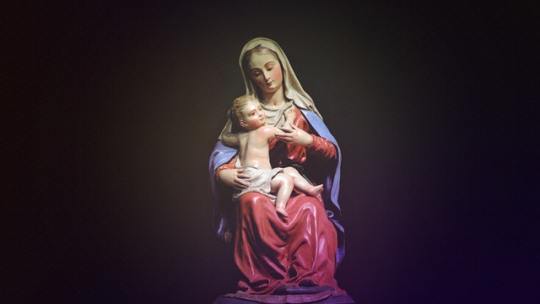
Observe the Holy Child turns from the Mother towards the fallen. So it is that love flows outward from the very beginning of the Holy Child’s days. Blessed are we upon whom the Holy Child gazes upon with mercy.

~*~*~*~*~*~*~*~
I have been thinking about devotional lives. Not everyone is called to a life of solitude and prayer. But there are many who are called to devote themselves to their deities. I think that the deities turn towards us even as we turn towards them. That the devotional life is a life of communication and communion with the divine. And I think that is beautiful and should be embraced in all communities. Because the people who go to the divine come back to the community with wonders to share because of their special relationship.

Thursday, October 4, 2018

Video Post 15: Belief


Transcript:

Belief is a word that has been in the news a lot these days. It means different things in different contexts. In matters of faith, it is a state of acceptance of an argument as truth or falsehood. For the religious person, the criteria for something to be believable is highly personal. Religious creeds and systems of belief develop when groups of people come together and agree to accept the same criteria for belief.

I believe that people are fundamentally good. I believe that evil happens when they fail to follow the fundamental good within themselves. I believe the victims of evil who speak out are doing their best to seek aid and healing. When one has done evil to another, a rupture is made in the relationship that must be addressed before long term harm is done. This is the way of Thamé as I see it.

Sunday, March 11, 2018

Scripture reading and a problem.

I have a side project that I've been working on for a few months now as I have the energy for it. I've been copying over the sacred scriptures of Filianism/Déanism into a hardbound notebook as a devotional practice and meditation. I am only partly through the Gospel of Our Mother God and one thing keeps standing out to me as I consider it all very carefully. That it does not address whom has any mantle of authority upon them by way of Dea's grace.

There are some who follow that if their ordination comes by way of an unbroken faith tradition (i.e. Christian, Buddhist, or Hindi) that it had the authority that would come from Dea as in antiquity (so claimed by scholars who have since been shown to be questionable sources). There are some who argue that their authority is given to them by way of divine grace and should be accepted upon the basis of their word. And then there are the more mercenary of those who would be clergy that argue that priesthood is recognized by humanity through pieces of paper and acquire ordination from unconventional but publicly recognized sources to support the ordination given by way of divine grace at an earlier time.

It is a question that I sit and try to make sense of on a regular basis. I look at myself in the mirror and ask how I can expect anyone to think I have the authority to speak on any of this? At the same time, I can not help but ask questions. Questions of myself and my own work as clergy, questions of the role of any clergy in society, and what exactly that relationship is. This has lead me to reading philosophical texts, instructional books, and the writings of many different faith systems (holy texts and those written by lay people of deep insight). In all of my reading, I have a general idea of how the concept of clergy is supposed to work for the Christian faith, for example, and the social contract that goes along with it. I struggle to suss out what that social contract is for clergy of other faiths, simply because they are not the dominant faith practiced in my region so it is harder to get information.

Three questions keep coming back. The first I just mentioned: how can we tell whom is clergy and has the mantle of authority upon the by way of Dea's grace? The second question is what are the responsibilities and duties of said clergy? And the third question is what is the scope of their authority? Are all clergy equal or is their a hierarchy we are not aware of? In many ways, the answers to the second question are parallel to those for when this question is applied to Christianity. But the first and third questions are far more fuzzy. It frustrates me because if one is clergy or somehow a vowed person (monk, nun, godspouse, spirit-spouse, child, etc.), the questions about how we relate to the rest of humanity is just as important as those about how we relate to deity.

Is there an abbey structure in place, for example, for nuns of Loki? Do they have a rule to follow and a Mother Superior to answer to? (From the pagan nuns I have been in contact with, there is not a Mother Superior and they instead have a council of sorts where decisions are made upon debate, discussion, and collective discernment of the will of deity. And these nuns are godspouses as well. Because I don't wish to have their arrangement be the model of what I am proposing, I will not elaborate on it.) And there are the people who would be like pagan anchorites in the world, living a life of solitude and meditation and communion with their gods. Who helps them? Because the Christian anchorites were supported by the faith community and under the direction of spiritual advisers who were trained in their faith's precepts to high degree (theoretically) and the needs they could not meet on their own were provided for them. (In antiquity, there were anchorites who lived in a walled chamber of a monastery with a small window whereby they could communicate with others and receive the necessities for life (such as food and drink) but otherwise were completely isolated from the world.)

These are important questions to find answers to. If we can not find answers, we must make them or happenstance and folly will make them for us. As a student of history, happenstance and folly are not the gentlest of teachers and can lead to utter ruin, snatching defeat from the jaws of victory. So, I ask my friends who are clergy within the Filianic/Déanic community specifically, what are the answers to:

  • What is the signs of spiritual authority? How do we recognize them?
  • What are the responsibilities that come with spiritual authority? What are the duties required of clergy and they who are avowed to a devotional relationship with Dea?
  • What are the things that are in this world they have authority over? What in the realm of spirit do they have authority over? Where are the limits of this authority?
  • Are all clergy equal despite differing traditions/sects of worship? 

Thursday, January 11, 2018

Prayer habits are hard.

Dear gentle Reader,

My good and faithful friend, I must be honest with you. Prayer is very hard to do when you are not well. Depression lies and tells me that all is hopeless. Anxiety tells me that if I don't pray in the correct fashion, the gods will be offended and my luck will turn worse. Exhaustion and brain fog makes it hard to remember to write in my prayer journals or bide my beads. It's just very hard to pray these days.

Which makes it all the more important to at least try. Sometimes, what I manage is a line or two in one of my prayer journals. Other times, I just hold my prayer beads and silently as the gods to just help me make it through the day and help me meet my responsibilities. My most common prayer of late is simply "Please help me." I cast it out to any of the household gods that may hear me with great desperation at times. Attempting to sleep when I'm struggling with panic and such, I tend to ask Freyr and Loki to help me. That's all I ask for, help. Sometimes that help comes by way of feeling their presence at my side. Sometimes that help comes by way of them talking me through a grounding exercise or reminding me to take a medication I forgot.

The hardest thing right now in my prayer life is remembering that I can take time to pray and it is ok. It is a form of self care that I struggle with, because I'm not very good at self care. Interestingly enough, the form of 'active' prayer that I have been strongly encouraged to engage in from the gods are all self care activities. Like Freyr asking me to spend some time with him doing exercise and yoga (he especially enjoys taking walks with me when the weather is nice) or Loki telling me I should eat good healthy food that I enjoy and take showers when I need them.

Godspousery means there is a more direct relationship, even when depression makes me feel isolated from them. Thus, they make a point of things like very strongly encouraging me to take a nap when I have a migrane coming on or will offer encouragement when I am doing something difficult. And that exchange is kinda what prayer is about. It's a discussion between you and the gods. Sometimes, that discussion is "Hey, it's time to take your medication and go to bed" if you're open to it. 

Sunday, October 23, 2016

Superstition and Religion (Part 1)

Superstition and religion have a symbiotic and complementary relationship within the context of modern American Witchcraft. There are many practices that can be upheld as similar between religion and superstition. The act of lighting a candle which one has dedicated for a specific intent is a fine example. How this act is viewed within the social setting determines if it is stated to be a superstitious or a religious one. Prior to the rise of modern American Witchcraft, the only setting where it would be viewed as a religious action is within a Christian church (and this would vary according to the denomination of Christianity espoused). The lighting and blowing out of the birthday cake candle(s) would be categorically a superstitious act, perhaps some vestige of an ancient rite within the cultural memory of the people.

The birthday cake’s wishing candle, and other superstitions within the United States (primarily) were frequently decried as things that the irrational mani would believe in. Following the rise of the Industrial Revolution and the development of a more urban cultural identity within the United States, many of the folk practices and beliefs began to be held in contempt. As such, they were referred to as superstitions for the sake of denigrating their prominence in the culture and to make room for a new set of beliefs. As such, things such as the belief in ghosts and the minor vulgar rituals, such as turning the statue of St. Anthony to face the wall until a lost item is found, went underground and disappeared from the surface of the cultural identity of the United States. The main reason for this happening was that people did not want to appear out dated or foolish in the eyes of their peers.

Even now, one will find that an openly professed belief in ghosts (for example) is generally scorned and mocked by the majority. Rephrase this belief into the context of the colloquialii version of Christianity that’s ubiquitous and you find it is a belief in angels rather then ghosts, which is now more of a religious then superstitious belief. In the early 1960s, modern Witchcraft was introduced to the United States by Raymond Buckland. Initially, he disseminated information via word of mouth. At roughly the same time, Zusanna Budapest (more commonly known as Z. Budapest) began to disseminate information via word of mouth.

In roughly ten years, both of these individuals burst onto the cultural scene. Buckland’s Complete Book of Witchcraft quickly became the cornerstone of the voluminous body of work surrounding modern American Witchcraft. Z. Budapest and her coven rocketed to something akin to stardom with their involvement in the Feminism movement. It was within the context of Witchcraft that the folk practices that had been decried as superstition began to take on a more legitimate appearance. (Russell, p.172) As the glamour and celebrity status of these and other Witch authors grew, the concept of Witchcraft as a religion grew.

Witchcraft as a religion, rather then a set of superstitions, provided a place where one could openly express the suppressed elements of the cultural identity of the United States. For this reason, it flourished and multiple elements from various sub-cultures began to become present as well. As a result, many different Traditionsiii were established and other occult practices and belief systems began to become apparent. Public works discussing practices such as Louisiana Voodoo and folk practices began to be produced targeted for the common man rather then academia. This broad spectrum of information quickly set the stage for Witchcraft to receive a minor degree of approval in the United States as a religion. Aside from the readily available information, individuals who had been engaged in covert practice of these marginalized belief systems and practices found it a safer environment to publicly express themselves on these topics.

If one looks at the seminal works of the entire modern Witchcraft movement, one finds that these early texts were of an academic tone. Many of the early modern Witchcraft authors worked to retain the apparent authenticity that came with academia. Using Buckland’s Complete Book of Witchcraft as a representative of these early texts, one finds the book is organized much like a work book. The chapters are organized into a combination of lessons and exercises. In Buckland’s work, it is apparent that he drew a great deal of material from folk practices that he found about him, just as Gerald Gardner and others before him in England had.

These folk practices, such as not walking under a ladder, were part of the common knowledge of earlier generations and the efforts of authors such as Buckland to place them into a religious context served to legitimize the remaining inclinations towards ‘superstition’ present for many people. Within academia, much of this work was met with great excitement. These modern Witchcraft authors were drawing from anthropological studies and similar academic endeavors to recreate ancient beliefs upon the basis of vestigial elements of practices that linger in the superstitions and folk lore of the region. When these authors presented apparent evidence supporting the theories they referenced in their works, this strengthened the legitimacy of their claims in the eye of the common man.

As legitimacy was acquired from the academic connection, the number of adherents to the modern Witchcraft movement began to rise significantly. From this rise came a development of communication between many of the different groups. As a result, the community of modern Witchcraft began to diversify. With a boost in the number of people looking at the issues and bringing their unique perspectives to the discussion, the distinguishing line between superstition and religion within modern Witchcraft began to blur to some extent.

Given the highly individualistic nature and cellular organization of modern Witchcraft, as well as the lack of any formal hierarchy structure, a great deal of the question determining the difference between superstition and religion became quite difficult to ascertain. It quickly became apparent in the period of time between the 1970s and the 1980s that the practices of a single Witch were of equal validity as those of an entire Tradition. From this point, there was found not only a great deal of diversification but also the resurgence of superstition within the context of modern Witchcraft in the United States.

Among the ways that superstition and religion can be distinguished is the way the rituals and associated behaviors are explained. Superstition often gives little, if any, explanation for why the action is carried out. Generally, a superstitious action is reactionary to a situation and has little connection to the event it is used as a reaction to or the intended result. With a religious act, the explanation may seem insubstantial but there is an explanation which can be placed into the context of the cosmology and theology of the given religion. Sometimes a superstitious act can be confused with a religious one due to ritualism. Ritualism is an over emphasis upon a series of actions and the elements that form a ritual rather then the objective of the ritual. Ritualism can be described as a subset of superstition or an intermediate point between these two concepts which are often upheld as opposites.

Ritualism and superstition within modern Witchcraft became increasingly prevalent due to a sudden influx of Seekers and Neophytes into the subculture. These individuals, eager to discuss and explore their newfound belief system reached out to each other thru the different means of communication available to them. Volumes of information were made available during the publishing boom that occurred at the same time the Internet started to become a cultural force. The sudden proliferation of information about Witchcraft resulted in an increased awareness of this movement by the culture at large, as seen by the rise of more mainstream references to Witchcraft, generally in a negative sense as proscribed by the old cultural stereotypes which continued to echo in the more urbane modern society that Witchcraft was reemerging into.

This created a degree of tension between the established practitioners and individuals who were seeking to learn about modern Witchcraft. As a result, many of the Witches who had sufficient information to adequately teach others in the more ‘traditional’ method of taking a Seeker into the coven and educating them personally refused to do so. Fears of legal reprisal and persecution forced these Witches to become extremely selective of whom they taught. Unfortunately, the volume of people seeking information greatly outstripped the number of teachers who were made available.

As a direct result of this, the Seekers were looking at the various published and publicly shared information available and attempting to educate themselves. At this point in time, ritualism became increasingly apparent. Ritualism was an influence upon the introductory phase of the development of modern Witchcraft in America but it was largely confined to the Neophyte Witches of the covens. With the population boom of Seekers and Neophytes, many failed to understand the language of modern Witchcraft and how elements of Witchcraft such as magic worked in the worldview of the belief system.

With the increased ability for Witches to network and communicate with each other, there came a rapid dissemination of poorly understood ideas and poorly communicated concepts. This ushered in a new development within the relationship between the religion of modern Witchcraft and the superstitions surrounding it. Superstition had additionally come to incorporate the flawed understandings of the basic concepts of modern Witchcraft. A fine example of this is the supposed animated aspects of a Tarot deck. A Tarot deck is a pack of 72 illustrated cards used for the card game Triumphs and also as a divination tool. Within the community of modern Witches and occultists, Tarot decks are primarily used as divination tools. Many of the second generation Witches explain the Tarot deck’s effectiveness as a divination tool in terms of the deck’s personality and moods, ascribing to the cards a semi-sentient quality. In concurrence with this have arisen many minor rituals to appease the semi-sentient pack of cards and assure a favorable result in working with them. Unfavorable or confusing readings are ascribed to a displeased Tarot deck rather then potential difficulties upon the part of the diviner.

The idea that inanimate objects can have human personality qualities is one that perpetuates fairly widely across the pagan community online. It is the conflating of animism with superstition that results in the premise that a pack of cards is angry with a person for not using them more frequently and this is why they are giving an unfavorable result. Animism, the premise that all things that exist are endowed with a spirit of some sort, is an ancient belief system that has seen some resurgence in the West. It is confused with superstition that says that the Tarot deck that is stored on a low shelf is acquiring unfavorable aspects versus the one stored on a higher shelf. As a result, the person with the Tarot deck will say that the deck's spirit is angered with them for its placement on the shelf when in actuality the reader is coming to the session with their internal compass for reading set to anticipate unfavorable results due to where it is sitting when they come to collect it for use.

Disentangling superstition and animism is part of the process of freeing modern pagan practitioners from the paradigm of fear that tends to plague them. While many religions are build upon a basis of fear, which feeds into superstition, growth within faith comes from resolving the fears and acquiring knowledge of the deeper truths of the religion in question. An enormous mystic tradition can be found in faiths  all around the world that seeks to divorce superstition from belief. When superstition is carefully excised from faith practices and the associated thought forms of a given religion, the practitioner moves into a deeper, more intimate and more deliberate relationship with their faith.

In part two, I will cover additional material regarding the interplay between superstition and modern pagan belief systems.

~*~*~*~*~*~*~*~*~*~*~

i I am using the term ‘man’ in the sense of referring to all of humanity in this sentence. I will be using this convention for the sake of clarity and convenience.

ii‘Colloquial Christianity’ is the vulgar form of Christianity as found in the mainstream culture of the United States. This secular form of Christianity is divorced of any theological teachings and holds only a few rudimentary vestiges of the religion it has bastardized. Among them being the celebration of the nativity of Jesus, the inclination against working on Sunday, and the pink and plastic amalgamation of the solemnity and celebratory aspects of Easter. Colloquial Christianity lacks any but the barest remote resemblance to the faith system it has grievously abused and repackaged into a commercial product. In light of this, however, one must recognize that colloquial Christianity is pervasive and often argued by many to be the state religion of the United States. It does have a dramatic impact upon the culture and deserves to be recognized as the culture shaping force it is.


iii The term ‘Tradition’ is used within the Witchcraft community and the Neo-pagan community as an alternative for the word ‘sect.’

Originally Published 2012 on Helium under the pen name Deb M.

Thursday, September 15, 2016

The Gift of Tears.

One of my sources of inspiration are the accounts of medieval European lay piety. There are so many little myths of local saints (frequently unrecognized by the Catholic Church, but still adored by the people in that region) that it is really difficult to begin to organize them. In the 13th Century CE[1], there was a sharp uptick in lay devotions and mysticism within Christianity. A cursory glance over the materials produced from that era and the stories that go back to this era, one finds that women were a very large part of this movement. One also finds that an enormous amount of this body of work focuses upon the establishment of a relationship between the individual and the divine.

Now, some may wonder what this has to do with what I titled this evening's post. Looking at the accounts of Margery Kempe, an English mystic who is honored within the Anglican faith but not in Catholicism (though she was a devout Catholic), there is much written of her frequent weeping for the mercy of her God and begging for his forgiveness of herself and others. This is not something that is only written within her autobiographical writings. It is also recorded to have been evident in female mystics in continental Europe during the era. This weeping was something called the 'gift of tears' by authors of that period.

It is not something spoken of today. It is actually forgotten for the most part in the accounts of mystic experiences and viewed with similar disdain as was done by the more cynical of Margery Kempe's contemporaries. The idea that one could be moved to tears by the force of spiritual experiences is alien to most people today. The idea of mysticism as something other than a blissful experience is something often swept aside by many people who write about it today. (I'm looking squarely at you, David Wolfe.)

Some people within the more ecstatic oriented Christian faiths will admit to being moved to tears, but it is always described as being something done to them by the Holy Spirit. It is something that is viewed as external and imposed upon them. Which, considering the emphasis that sects such as the Pentecostals place upon one's submission to their God's will, is not really much of a surprise. The pagan community treats the gift of tears (which does happen within the mystics of pretty much any faith you can find and those which are emerging) as a shameful secret. It is viewed as some sort of weakness and a sign of hysterics or some kind of mental illness. (There are also vast swaths of the pagan community that views mysticism as identical to mental illness as well, but that is a topic for another day.)

The gift of tears is not something that is strictly motivated by the desire for divine forgiveness and mercy, though it is one of the reasons why a mystic may be moved to tears. It also comes with the emotions of joy, grief, frustration, and pretty much every aspect of how we are moved to tears elsewhere in our lives. The gift of tears is a bit different from that which arises due to the more 'mundane' elements of our lives. Where the stressors of our daily lives can bring us to tears, the gift of tears is something that comes with a very profound sense of the presence of the divine in our lives at the time it happens.

Like Margery Kempe, the mystic who is blessed with the gift of tears has their awareness overwhelmed by the divine. They are moved to weep by the sheer force of the gods. It is an ecstatic experience, though the ecstasy is not necessarily something blissful. It is, also, a very difficult thing to bear. Because, like Margery Kempe, the mystic who bears the gift of tears finds themselves alienated by their peers because it is so vastly different from what others experience and they will be in a position where their piety is challenged and possible accusations of mental illness or seeking dramatic attention are thrown about.

I can not claim that I have this gift. I have known people, however, who do have it. They are not the typical 'cry at the drop of a hat' people, and some of them never have teared up during a movie. Still, when they feel the presence of the divine, it is something that moves them so profoundly that they will weep. They are also people who have an awe inspiring depth of faith and adoration for their gods. When the thought of what their gods have endured and what they do for the world arises, these people do get a bit misty eyed because they can not help the force of emotion that arises from those thoughts.

We should all seek to attempt to emulate that level of faith and empathy for the divine. The heart road that is ruled by Sai Sushuri is a mystic path within Filianism (and related faiths) where the practitoner is urged to feel such love and compassion towards the divine and the world. The gift of tears, when viewed from this context, is perhaps one of the gentlest ways that the divine may lay their hand upon us. To be so overwhelmed by love that one has tears streaming down their face can be a profoundly beautiful experience for the person moved to tears and those witnessing them, think of the mother who weeps when her child is married and they're so filled with love and happiness for their child that they can not help it.

Tears for the sake of faith are not a sign of illness or weakness. They are a sign of strength in said faith and tenderness of the heart. Embrace them when they come to you, for I suspect that everyone at some point in their life will have this blessing come upon them. And recognize that they are truly a gift because they come with the full force of the divine's presence and blessing.

19. Let flow your tears, My children, for they are the beginning of joy. 20. For every tear of true repentance shall dissolve away a thorn, and it shall be as though it had not been.

The Temple of the Heart, The Gospel of Our Mother God[2]


~*~*~*~*~*~*~*

1. CE designates Common Era, this is what I use in place of Anno Domni (AD).
2. This can be found online at the following link: http://theapedia.referata.com/wiki/The_Temple_of_the_Heart